
 ,
Claude Kpomasse,
Essolakina Dolou,
Amavi Degnon,
Apissiwe Wourao,
Essodina Talaki,
Simplice Damintoti Karou,
Anoumou Yaotse Dagnra
,
Claude Kpomasse,
Essolakina Dolou,
Amavi Degnon,
Apissiwe Wourao,
Essodina Talaki,
Simplice Damintoti Karou,
Anoumou Yaotse Dagnra
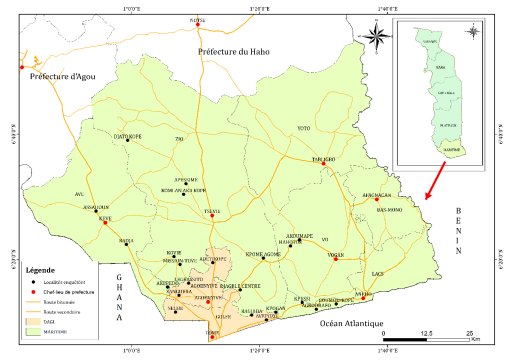
Background: Antimicrobial resistance is growing at an alarming rate to the point of outpacing the development of new means of infection control, thus threatening public health and the economics of agriculture. This study aims to explore poultry farmers’ level of knowledge about the dangers of antibiotic resistance, and their attitude and behavior during the use of antibiotics in poultry. Methods: In November 2022, a semi-structured questionnaire was used to collect information from 153 poultry farms in the “Maritime Region’’ and “Grand-Lome District’’. The collected data concerned awareness of the behavioral gestures and dangers of antibiotic resistance that put poultry farmers in contact with resistant bacteria. Results: The findings revealed that 56.1% of poultry farmers (82 out of 146) were aware of antibiotic resistance, while 63% (70 out of 119) understood the risk of human contamination through poultry products. Despite this awareness, 55.6% (74 out of 133) of farms lacked protective measures during tasks such as handling droppings or administering antibiotics. A significant association was observed between animal health training and both awareness of antibiotic resistance and biosecurity practices (p < 0.05). However, no association was found between the training received and the poultry farmers' behavior regarding the use of antibiotics (p-value > 0.05). Conclusion: Poultry farmers’ attitudes and behavior are favorable to the dissemination of resistant bacteria. It is necessary to continue sensitization by focusing on the risk factors that can put poultry farmers in contact with antibiotic-resistant bacteria.
| Published in | Animal and Veterinary Sciences (Volume 13, Issue 4) |
| DOI | 10.11648/j.avs.20251304.11 |
| Page(s) | 83-97 |
| Creative Commons |
This is an Open Access article, distributed under the terms of the Creative Commons Attribution 4.0 International License (http://creativecommons.org/licenses/by/4.0/), which permits unrestricted use, distribution and reproduction in any medium or format, provided the original work is properly cited. |
| Copyright |
Copyright © The Author(s), 2025. Published by Science Publishing Group |
Resistance Bacteria, Poultry, Risk Factors, Dissemination, Togo
Variables | Responses | Respondents | Percentages (%) |
|---|---|---|---|
Sex | Male | 103 | 85.120 |
Female | 18 | 14.880 | |
Educational level of the manager | No formal education | 1 | 0.830 |
Primairy and Secondairy school | 52 | 42.980 | |
Tertiary | 68 | 56.200 | |
Principal owner’s occupation | Breeders and farmers | 51 | 42.150 |
Teachers, nurses, agronomists, Pensioners | 34 | 28.100 | |
Shopkeepers, business | 36 | 29.750 | |
Experience | 0-4 years | 45 | 37.200 |
05-10 years | 47 | 38.840 | |
10 years more | 29 | 23.960 |
Number (N) of poultry | Staff | Percentages (%) |
|---|---|---|
N< 100 | 07 | 04.860 |
100≤ N ≤ 500 | 54 | 37.500 |
501≤ N ≤ 1,000 | 30 | 20.830 |
1001≤ N ≤ 2,000 | 27 | 18.750 |
2001≤ N ≤ 5,000 | 15 | 10.410 |
5001≤ N ≤ 22,500 | 11 | 07.630 |
Total poultry farms | 144 | 100 |
Poultry count average per farm | 1,849 | - |
Variables | Responses | Respondents | Percentages (%) |
|---|---|---|---|
Production type | Intensive | 15 | 09.800 |
Semi-intensive | 112 | 73.200 | |
Improved | 26 | 16.990 | |
Management responsible | A technician and worker | 13 | 09.490 |
A technician | 67 | 48.910 | |
A worker | 26 | 18.980 | |
Himself | 31 | 22.630 | |
Is there a permanent technician on the farm? | Yes | 76 | 63.870 |
No | 43 | 36.130 | |
Is there a permanent veterinarian on the farm? | Yes | 05 | 03.730 |
No | 129 | 96.270 | |
Water source for poultry | National circuit (TDE) | 01 | 0.720 |
Drilling | 103 | 74.640 | |
A well | 34 | 24.640 | |
Another poultry near the farm? | Yes | 68 | 51.520 |
No | 64 | 48.480 | |
Are there the houses near farm? | Yes | 122 | 89.710 |
No | 14 | 10.290 | |
A bunch of sick poultry on the farm? | Yes | 18 | 14.880 |
No | 103 | 85.120 | |
Faeces management | Thrown away | 1 | 0.730 |
Incinerated | 1 | 0.730 | |
Used in agriculture and market gardening | 135 | 98.540 | |
Used for biogas | 0 | 0.000 |
Knowledge on anti-microbial resistance (RAM) | |||||
Training on animal health | No | Yes | Total | p-value | Remarks |
No | 43 | 14 | 57 | <0.0001 | Significant |
Yes | 26 | 53 | 79 | ||
Total | 69 | 67 | 136 | ||
Biosecurity knowledge | |||||
Training on animal health | No | Yes | Total | p-value | Remarks |
No | 13 | 38 | 51 | <0.0001 | Significant |
Yes | 02 | 75 | 77 | ||
Total | 15 | 113 | 128 | ||
Knowledge of "critically important" ATB | |||||
Training on animal health | No | Yes | Total | p-value | Remarks |
No | 46 | 02 | 48 | 0.760 | Not significant |
Yes | 73 | 04 | 77 | ||
Total | 119 | 06 | 125 | ||
Biosecurity device at farm entrance | |||||
Training on animal health | No | Yes | Total | p-value | Remarks |
No | 19 | 32 | 51 | 0.170 | Not significant |
Yes | 20 | 57 | 77 | ||
Total | 39 | 89 | 138 | ||
Reason for not asking a doctor for an antibiotic prescription | |||||
Training on animal health | I’m not sick | Fear of intoxication | Total | p-value | Remarks |
No | 19 | 32 | 51 | 0.063 | Not significant |
Yes | 20 | 57 | 77 | ||
Total | 39 | 89 | 138 | ||
Strain | Manager's level of education | Do you use antibiotics on your farm ? | Do you have a prophylaxis plan? | Do you have a fixed technician on the farm? | Do you have a biosecurity system at the farm entrance ? | |
|---|---|---|---|---|---|---|
Strain | 1.000 | -0.047 | -0.147 | -0.155 | 0.063 | -0.080 |
Manager's level of education | -0.047 | 1.000 | 0.168 | 0.280 | -0.116 | 0.090 |
Do you use antibiotics on your farm? | -0.147 | 0.168 | 1.000 | 0.532 | -0.192 | 0.477 |
Do you have a prophylaxis plan? | -0.155 | 0.280 | 0.532 | 1.000 | -0.095 | 0.387 |
Do you have a fixed technician on the farm? | 0.063 | -0.116 | -0.192 | -0.095 | 1.000 | -0.185 |
Do you have a biosecurity system at the farm entrance? | -0.080 | 0.090 | 0.477 | 0.387 | -0.185 | 1.000 |
AMR | Antimicrobial Resistance |
GRAM | Global Research on Antimicrobial Resistance |
WHO | World Health Organization's |
ANAPAT | National Association of Poultry Producers of Togo |
FAO | Food and Agriculture Organization of the United Nations |
WOAH | World Organisation for Animal Health |
Variables | Responses | Respondents | Percentages (%) |
|---|---|---|---|
Knowledge of an ATB | Yes | 135 | 93.750 |
No | 09 | 06.250 | |
Precise example of an ATB | Yes | 74 | 52.110 |
No | 68 | 47.890 | |
AMR knowledge | Yes | 82 | 56.160 |
No | 64 | 43.840 | |
Animal health training | Yes | 82 | 56.160 |
No | 64 | 43.840 | |
Existence of a Prophylactic plan | Yes | 125 | 89.930 |
No | 14 | 10.070 | |
Elaboration of a prophylactic plan | Veterinary | 75 | 61.470 |
Incubator | 04 | 03.270 | |
A technician | 43 | 35.240 | |
ATB in the prophylactic plan | Yes | 125 | 89.930 |
No | 14 | 10.070 | |
Why is ATB in the prophylactic plan? | Avoid disease | 120 | 96.000 |
Because animal don’t talk | 47 | 37.600 | |
Veterinary recommandation | 5 | 04.000 | |
ATB administration | Oral and injectable | 2 | 01.480 |
Oral | 133 | 98.520 | |
Training in the use of ATB | Yes | 73 | 50.000 |
No | 73 | 50.000 | |
Knowledge of ‘’critically important ATB’’ | Yes | 06 | 04.760 |
No | 120 | 95.240 | |
Breeder informed of human mortality coming to ATB resistance | Yes | 32 | 25.600 |
No | 93 | 74.400 | |
Breeder informed of the decrease in the discovery of new ATB | Yes | 29 | 24.170 |
No | 90 | 75.000 | |
I don’t know | 01 | 0.830 | |
Farmer informed of the non-sensibility of certain ATB on bacteria? | Yes | 75 | 65.790 |
No | 39 | 34.210 | |
Can a viral disease be treated? | Yes | 24 | 20.340 |
No | 72 | 61.020 | |
I don’t know | 22 | 18.640 | |
Biosecurity knowledge | Yes | 114 | 88.370 |
No | 15 | 11.630 | |
On-farm biosecurity system | Yes | 89 | 68.990 |
No | 40 | 31.010 | |
Summary of poultry farmers' behavior when using antibiotics | |||
Breeder’s request for ATB prescription for animals change in dose of ATB per day | Yes | 80 | 59.260 |
No | 55 | 40.740 | |
Never | 90 | 72.000 | |
Sometimes | 35 | 28.000 | |
Modification of the number of days in ATB treatment | Never | 76 | 60.800 |
Sometimes | 49 | 39.200 | |
Request for prescription of ATB by the breeder for his own health | Yes | 06 | 04.580 |
No | 125 | 95.420 | |
Reason for not requesting ATB prescription by the breeder for his own health | I’m not sick | 53 | 80.300 |
Fear of intoxication | 13 | 19.700 | |
Use of herbal medicines by farmers for their own health | Yes | 71 | 60.170 |
No | 47 | 39.830 | |
Knowledge of the dose of herbal medicines | Yes | 06 | 08.820 |
No | 62 | 91.180 | |
Evaluation of the cost of antibiotic prophylaxis on animals | Yes | 23 | 19.010 |
No | 98 | 80.990 | |
Breeder interested in antibiotic susceptibility testing before prescribing ATB to animals? | Yes | 120 | 96.000 |
No | 05 | 04.000 | |
Use of human drugs on animals? | Yes | 06 | 04.940 |
No | 108 | 95.160 | |
Workers on duty during droppings pick-up | Yes | 105 | 76.640 |
No | 32 | 23.360 | |
Wearing a mask when picking up droppings | Yes | 59 | 44.360 |
No | 74 | 55.640 | |
| [1] | Likotrafiti, E., Oniciuc, E., Prieto, M., Santos, J., López, S., and Alvarez-Ordóñez, A. Risk assessment of antimicrobial resistance along the food chain through culture-independent methodologies. Efsa J., 2018 16(1): e160811. |
| [2] |
WHO. Antimicrobial resistance Global Report on surveillance; summary. 2014, 256 p.
https://www.who.int/publications-detail-redirect/WHO-HSE-PED-AIP-2014.2 |
| [3] | Jindal, A., Pandya, K., Khan, I. Antimicrobial resistance: A public health challenge. Medical Journal Armed Forces India. Vol 71, Issue 2, April 2015, Pages 178-181. |
| [4] | Muaz, K., Riaz, M., Akhtar, S., Park, S., and Ismail, A. Antibiotic residues in chicken meat: global prevalence, threats, and decontamination strategies: a review. J Food Prot. (2018) 81: 619-27. |
| [5] | Murray, C., Ikuta, K., Sharara, F., Swetschinski, L., Aguilar, G., Gray, A., Han, C., Bisignan, C., Rao, P., Wool, E., Johnson, S., Browne, A., Chipeta, M., Fell, F., Hackett, S., Haines-Woodhouse, G., Hamadani, B., Kumaran, E., McManigal, B., Naghavi, M. Global burden of bacterial antimicrobial resistance in 2019: a systematic analysis. The Lancet, 2022, 399(10325), 629-655. |
| [6] | Al, A., Pasha, M., Hoque, M., Siddiki, A., Saha, S., Kamal, M. Methodology for laboratory-based antimicrobial resistance surveillance in animals. Veterinary World, 2022, 15(4): 1066-1079. |
| [7] | Toudji, A., Djeri, B., Karou, S., Tigossou, S., Améyapoh, Y., et De Souza, C. Prévalence des souches d’entérobactéries productrices de bêta-lactamases à spectre élargi isolées au Togo et de leur sensibilité aux antibiotiques. Int. J. Biol. Chem. Sci. 11(3): 1165-1177, June 2017. |
| [8] | Al, A., Hoque, M., Siddiki, A., Saha, S., and Kamal, M. Antimicrobial resistance situation in animal health of Bangladesh. Vet. World, 2020, 13(12): 2713-2727. |
| [9] | Salam, M., Al-Amin, M., Salam, T., Pawar, J., Akhter, N., Rabaan, A., and Alqumber, M. Antimicrobial resistance: a growing serious threat for global public health. Healthcare, 2023, 11(13), 1946. |
| [10] | Webb, H., Angulo, J., Granier, S., Scott, H., Loneragan, G. Illustrative examples of probable transfer of resistance determinants from food animals to humans: Streptothricins, glycopeptides, and colistin. F1000Research 2017, 6: 1805. |
| [11] | Okaiyeto, S., Sutar, P., Chen, C., Wang, J., Mujumdar, A., Zhang, J., Fang, X., Zhang, C., and Xiao, H. Antibiotic Resistant Bacteria in Food Systems: Current status, resistance mechanisms, and mitigation strategies. Agriculture Communications, Volume 2, Issue 1, March 2024, 100027. |
| [12] | WHO. France’s global health strategy. 2017, 34 p. |
| [13] | Bedekelabou, A., Talaki, E., Dzogbema, K., Dolou, M., Savadogo, M., Orou Seko, M., Alambedji, R. Assessing farm biosecurity and farmers' knowledge and practices concerning antibiotics and antibioticresistance in poultry and pig farms in Southern Togo. Veterinary World, 2022, 15(7): 1727-1737. |
| [14] | ANPAT-Togo. Poultry farms list in Togo. Togo Livestock Department, 2017, Unpublished manuscript. |
| [15] | INSEED. Communal map of the Togo ‘’maritime region’’. Version 2019 |
| [16] | Nundy, S., Kakar, A., Bhutta, Z. How to practice academic medicine and publish from developing countries? A practical Guide. Singapore: Springer Nature, 2022, 470 p. |
| [17] | Bedekelabou, A., Talaki, E., Dolou, M., Diouf, A., Alambedji, R. Antibiotic resistance of enterobacteria (Escherichia coli, Klebsiella spp. and Salmonella spp.) isoled from healthy poultry and pig farms in peri-urban area of Lomé, Togo. African Journal of Microbiology Research. Vol. 14(12), pp. 657-666, December, 2020. |
| [18] | Jalca, A., Lopez, M., Sotelo, F., Raymundo, C. Adoption of Snowball Sampling Technique with Distance Boundaries to Assess the Productivity Issue Faced by Micro and Small Cocoa Producers in Cusco. In: Ahram T., Taiar R., Colson S., Choplin A. (eds) Human Interaction and Emerging Technologies. IHIET 2019. Advances in Intelligent Systems and Computing, vol 1018. Springer, Cham, 2020. |
| [19] | Charles, Q., Stephanie, E., Luis, S., and Benjamin, P. Language differences between interviewers and respondents in african surveys. In book: The Essential Role of Language in Survey Research (pp. 101-116), Sha, M., & Gabel, T. (Eds.) (2020). RTI Press. RTI Press Book No. BK-0023-2004 |
| [20] | Dhayal, V., Krishnan, A., Rehman, B., Singh, V. Understanding Knowledge and Attitude of Farmers towards Antibiotic Use and Antimicrobial Resistance in Jhunjhunu District, Rajasthan India. Antibiotics (Basel). 2023 Dec 12; 12(12): 1718. |
| [21] |
FAO. Revue nationale du secteur avicole au Togo. 2015, 71 p.
https://www.fao.org/documents/card/fr/c/4e80ffe6-8875-4e9b-8406-fff056632cf9/ |
| [22] | Nuvey, F., Arkoazi, J., Hattendorf, J., Mensah, G., Addo, K., Fink, G., Zinsstag, J., & Bonfoh, B. Effectiveness and profitability of preventive veterinary interventions in controlling infectious diseases of ruminant livestock in sub-Saharan Africa: a scoping review. BMC Veterinary Research, 2022, 18(1). |
| [23] | Farrell, S., McKernan, C., Benson, T., Elliott, C., Dean, M. Understanding farmers' and veterinarians' behavior in relation to antimicrobial use and resistance in dairy cattle: A systematic review. Journal of Dairy Science, 2021, 104, 4, 4584-4603. |
| [24] | Mockshell, J., Ilukor, J., & Birner, R. Providing animal health services to the poor in Northern Ghana: rethinking the role of community animal health workers? Tropical Animal Health and Production, 2013, 46(2), 475-480. |
| [25] | Dache, A., Dona, A., Ejeso, A. Inappropriate use of antibiotics, its reasons and contributing factors among communities of Yirgalem town, Sidama regional state, Ethiopia: A cross-sectional study. SAGE Open Med. 2021 Sep 3; 9: |
| [26] | Liu, C., Chen, Y., Li, X., Zhang, Y., Ye, J., Huang, H., Zhu, C. Temporal effects of repeated application of biogas slurry on soil antibiotic resistance genes and their potential bacterial hosts. Environ Pollut. 2020; 258: 113652. |
| [27] | Lima, T., Domingues, S., Da Silva, G. Manure as a potential hotspot for antibiotic resistance dissemination by horizontal gene transfer events. Vet Sci. 2020 Aug 13; 7(3): 110. |
| [28] | Fuller, W., Kapona, O., Aboderin, A., Adeyemo, A., Olatunbosun, O., Gahimbare, L., Ahmed, Y. Education and Awareness on Antimicrobial Resistance in the WHO African Region: A Systematic Review. Antibiotics. 2023; 12(11): 1613. |
| [29] | Talaki, E., Dzogbema, K., Adjrah, Y., & Tona, K. Current status of family poultry production in Togo. International Journal of Poultry Science, 2020, 19(12), 568-576. |
| [30] |
Niyibizi, B. Preliminary study on the use of antibiotics in laying hen farms in the Dakar region and the presence of antibiotic residues in eggs. 43 p French publication. 2012.
https://beep.ird.fr/collect/eismv/index/assoc/MEM12-2.dir/MEM12-2.pdf |
| [31] | Emes, E., Faye, A., Naylor, N., Belay, D., Ngom, B., Fall, AG., Knight, G., & Dione, M. Drivers of Antibiotic Use in Semi-Intensive Poultry Farms: Evidence from a Survey in Senegal. Antibiotics, 2023, 12(3), 460. |
| [32] | Wahab, A., Basiouni, S., El-Seedi, H., Ahmed, M., Bielke, L., Hargis, B., Tellez-Isaias, G., Eisenreich, W., Lehnherr, H., Kittler, S., Shehata, A., & Visscher, C. An overview of the use of bacteriophages in the poultry industry: Successes, challenges, and possibilities for overcoming breakdowns. Frontiers in Microbiology, 2023, 14, 1136638. |
| [33] | Fathima, S., Shanmugasundaram, R., Adams, D., & Selvaraj, R. Gastrointestinal microbiota and their manipulation for improved growth and performance in chickens. Foods, 2022, 11(10), 1401. |
| [34] | Sylvie, R., Virginie, G., Edouard, L., Gwenola, V., Jean-Charle, G., Yoram, B., David, L., Jean-Louis, D., Helene, P., Laurence, P., Michel, V., Mathurin, F., Guillaume, S., Raymond, J., Martine, D., Gilles, P., Eric, P., Matthieu, A., Jean Yves, M., Harry, S., Jean-Frederic, C., Philippe, S. Alterations in the intestinal microbiome (Dysbiosis) as a predictor of relapse after infliximab withdrawal in crohn's disease. Inflammatory Bowel Diseases, 2014, 20(6), pp. 978-986. |
| [35] | Shanmugasundaram, R., Lourenco, J., Hakeem, W., Dycus, M., & Applegate, T. Subclinical doses of dietary fumonisins and deoxynivalenol cause cecal microbiota dysbiosis in broiler chickens challenged with Clostridium perfringens. Frontiers in Microbiology, 2023 14, 1106604. |
| [36] |
Costello, E., Lauber, C., Hamady, M., Fierer, N., Gordon, J., Knight, R. Bacterial community variation in human body habitats across space and time. Science, 2009, 18; 326(5960): 1694-1697.
https://scholar.afit.edu/cgi/viewcontent.cgi?article=1163&context=facpub |
| [37] | Ouedraogo, A., Jean Pierre, H., Banuls, A., Ouedraogo, R., Godreuil, S. Émergence et diffusion de la résistance aux antibiotiques en Afrique de l'Ouest: facteurs favorisants et évaluation de la menace. Médecine et Santé Tropicales, 2017; 27: 147-154. 25 January consult, 20: 22. |
| [38] | Tona, K. Etat des lieux de l’utilisation des produits pharmaceutiques dans la filière avicole au Togo. Rapport d’enquête, Institut de Médecine Tropicale Prince Léopold d’Anvers, 2010, 12 p. |
| [39] |
OIE. Liste OIE des agents antimicrobiens importants en médecine vétérinaire. OIE, 2014.
http://www.oie.int/fileadmin/Home/fr/Our_scientific_expertise/docs/pdf/ |
| [40] | Caudell, M., Dorado-Garcia, A., Eckford, S., Creese, C., Byarugaba, D., Afakye, K., Chansa-Kabali, T., Fasina, F., Kabali, E., Kiambi, S., Kimani, T., Mainda, G., Mangesho, P., Chimpangu, F., Dube, K., Kikimoto, B., Koka, E., Mugara, T., Rubegwa, B., and Swiswa, S. Towards a bottom-up understanding of antimicrobial use and resistance on the farm: A survey on knowledge, attitudes, and practices across livestock systems in five African countries. PLOS ONE, 2020, 15(1): e0220274. |
| [41] | Rhouma, M., Soufi, L., Cenatus, S., Archambault, M., & Butaye, P. Current Insights Regarding the Role of Farm Animals in the Spread of Antimicrobial Resistance from a One Health Perspective. Veterinary Sciences, 2022, 9(9), 480. |
| [42] | Singer, R., Finch, R., Wegener, H., Bywater, R., Walters, J., Lipsitch, M. Antibiotic resistance. The interplay between antibiotic use in animals and human beings. Lancet Infect. Dis, 2003; 3: 47-51. |
| [43] |
Mangin, L. Antibiotiques et résistances. Enquête sur les connaissances et les comportements du grand public. Sciences pharmaceutiques, 2016. |
| [44] | Habiba, U., Khan, A., Mmbaga, E., Green, I., & Asaduzzaman, M. Use of antibiotics in poultry and poultry farmers: A cross-sectional survey in Pakistan. Frontiers in Public Health, 2023, 11, 1154668. |
| [45] | Rware, H., Monica, K., Idah, M., Fernadis, M., Davis, I., Buke, W., Solveig, D., Karanja D., Duncan, C., Byskov, M., Keith, H. Examining antibiotic use in Kenya: farmers’ knowledge and practices in addressing antibiotic resistance. CABI Agric Biosci, 2024, 5, 21. |
| [46] | Dandi, S., Abarike, E., Abobi, S., Doke, D., Lyche, J., Addo, S., Edziyie, R., Obiakara-Amaechi, A., Øystein, E., Mutoloki, S., & Cudjoe, K. Knowledge, attitudes, and practices of antibiotic use among small-, medium-, and large-scale fish farmers of the stratum II of the Volta Lake of Ghana. Antibiotics. 2024; 13(7): 582. |
| [47] | Cella, E., Giovanetti, M., Benedetti, F., Scarpa, F., Johnston, C., Borsetti, A., Ceccarelli, G., Azarian, T., Zella, D., & Ciccozzi, M. Joining forces against antibiotic resistance: The One Health solution. Pathogens, 2023, 12(9), 1074. |
| [48] | Otieno, W., Nyikal, R., Mbogoh, S., & Rao, E. Adoption of farm biosecurity practices among smallholder poultry farmers in Kenya. An application of latent class analysis with a multinomial logistic regression. Preventive Veterinary Medicine, 2023, 217, 105967. |
| [49] | Mallioris, P., Teunis, G., Lagerweij, G., Joosten, P., Dewulf, J., Wagenaar, J., Stegeman, A., & Mughini-Gras, L. Biosecurity and antimicrobial use in broiler farms across nine European countries: toward identifying farm-specific options for reducing antimicrobial usage. Epidemiology and Infection, 2022, 151. |
APA Style
Dolou, M., Kpomasse, C., Dolou, E., Degnon, A., Wourao, A., et al. (2025). Risk Factors Associated with the Emergence and Dissemination of Antibiotic-resistant Bacteria Among Poultry Farmers in South Togo. Animal and Veterinary Sciences, 13(4), 83-97. https://doi.org/10.11648/j.avs.20251304.11
ACS Style
Dolou, M.; Kpomasse, C.; Dolou, E.; Degnon, A.; Wourao, A., et al. Risk Factors Associated with the Emergence and Dissemination of Antibiotic-resistant Bacteria Among Poultry Farmers in South Togo. Anim. Vet. Sci. 2025, 13(4), 83-97. doi: 10.11648/j.avs.20251304.11
AMA Style
Dolou M, Kpomasse C, Dolou E, Degnon A, Wourao A, et al. Risk Factors Associated with the Emergence and Dissemination of Antibiotic-resistant Bacteria Among Poultry Farmers in South Togo. Anim Vet Sci. 2025;13(4):83-97. doi: 10.11648/j.avs.20251304.11
@article{10.11648/j.avs.20251304.11,
  author = {Malibida Dolou and Claude Kpomasse and Essolakina Dolou and Amavi Degnon and Apissiwe Wourao and Essodina Talaki and Simplice Damintoti Karou and Anoumou Yaotse Dagnra},
  title = {Risk Factors Associated with the Emergence and Dissemination of Antibiotic-resistant Bacteria Among Poultry Farmers in South Togo
},
  journal = {Animal and Veterinary Sciences},
  volume = {13},
  number = {4},
  pages = {83-97},
  doi = {10.11648/j.avs.20251304.11},
  url = {https://doi.org/10.11648/j.avs.20251304.11},
  eprint = {https://article.sciencepublishinggroup.com/pdf/10.11648.j.avs.20251304.11},
  abstract = {Background: Antimicrobial resistance is growing at an alarming rate to the point of outpacing the development of new means of infection control, thus threatening public health and the economics of agriculture. This study aims to explore poultry farmers’ level of knowledge about the dangers of antibiotic resistance, and their attitude and behavior during the use of antibiotics in poultry. Methods: In November 2022, a semi-structured questionnaire was used to collect information from 153 poultry farms in the “Maritime Region’’ and “Grand-Lome District’’. The collected data concerned awareness of the behavioral gestures and dangers of antibiotic resistance that put poultry farmers in contact with resistant bacteria. Results: The findings revealed that 56.1% of poultry farmers (82 out of 146) were aware of antibiotic resistance, while 63% (70 out of 119) understood the risk of human contamination through poultry products. Despite this awareness, 55.6% (74 out of 133) of farms lacked protective measures during tasks such as handling droppings or administering antibiotics. A significant association was observed between animal health training and both awareness of antibiotic resistance and biosecurity practices (p  0.05). Conclusion: Poultry farmers’ attitudes and behavior are favorable to the dissemination of resistant bacteria. It is necessary to continue sensitization by focusing on the risk factors that can put poultry farmers in contact with antibiotic-resistant bacteria.},
 year = {2025}
}
TY  - JOUR
T1  - Risk Factors Associated with the Emergence and Dissemination of Antibiotic-resistant Bacteria Among Poultry Farmers in South Togo

AU  - Malibida Dolou
AU  - Claude Kpomasse
AU  - Essolakina Dolou
AU  - Amavi Degnon
AU  - Apissiwe Wourao
AU  - Essodina Talaki
AU  - Simplice Damintoti Karou
AU  - Anoumou Yaotse Dagnra
Y1  - 2025/07/23
PY  - 2025
N1  - https://doi.org/10.11648/j.avs.20251304.11
DO  - 10.11648/j.avs.20251304.11
T2  - Animal and Veterinary Sciences
JF  - Animal and Veterinary Sciences
JO  - Animal and Veterinary Sciences
SP  - 83
EP  - 97
PB  - Science Publishing Group
SN  - 2328-5850
UR  - https://doi.org/10.11648/j.avs.20251304.11
AB  - Background: Antimicrobial resistance is growing at an alarming rate to the point of outpacing the development of new means of infection control, thus threatening public health and the economics of agriculture. This study aims to explore poultry farmers’ level of knowledge about the dangers of antibiotic resistance, and their attitude and behavior during the use of antibiotics in poultry. Methods: In November 2022, a semi-structured questionnaire was used to collect information from 153 poultry farms in the “Maritime Region’’ and “Grand-Lome District’’. The collected data concerned awareness of the behavioral gestures and dangers of antibiotic resistance that put poultry farmers in contact with resistant bacteria. Results: The findings revealed that 56.1% of poultry farmers (82 out of 146) were aware of antibiotic resistance, while 63% (70 out of 119) understood the risk of human contamination through poultry products. Despite this awareness, 55.6% (74 out of 133) of farms lacked protective measures during tasks such as handling droppings or administering antibiotics. A significant association was observed between animal health training and both awareness of antibiotic resistance and biosecurity practices (p  0.05). Conclusion: Poultry farmers’ attitudes and behavior are favorable to the dissemination of resistant bacteria. It is necessary to continue sensitization by focusing on the risk factors that can put poultry farmers in contact with antibiotic-resistant bacteria.
VL  - 13
IS  - 4
ER  -
Regional Center of Excellence on Poultry Sciences (CERSA), University of Lome, Lome, Togo. Higher School of Agronomy (ESA), University of Lome, Lome, Togo
Regional Center of Excellence on Poultry Sciences (CERSA), University of Lome, Lome, Togo
Molecular Biology, Epidemiology, and Surveillance Laboratory for Water- and Foodborne Bacteria and Viruses (LaBESTA), University of Joseph Ki-zerbo, Ouagadougou, Burkina Faso
Higher School of Agronomy (ESA), University of Lome, Lome, Togo
Higher School of Agronomy (ESA), University of Lome, Lome, Togo
Regional Center of Excellence on Poultry Sciences (CERSA), University of Lome, Lome, Togo. Higher School of Agronomy (ESA), University of Lome, Lome, Togo
Regional Center of Excellence on Poultry Sciences (CERSA), University of Lome, Lome, Togo. Higher School of Biological and Food Sciences (ESTBA), University of Lome, Lome, Togo
Departement of Health Sciences (FSS), University of Lome, Lome, Togo



 Share This Article
 Twitter
 Linked In
 Facebook
 Copy
Copy Download