Research Article | | Peer-Reviewed

Prevalence and Diversity of Gastrointestinal Parasites in Native and Blended Goats from Mpwapwa District, Tanzania

Received: 26 September 2025     Accepted: 7 October 2025     Published: 30 October 2025
Views:       Downloads:
Abstract

Gastrointestinal parasites (GIP) in goats pose a global challenge, resulting in significant negative impacts that affect health, productivity, and economic value. These parasites include nematodes, cestodes, and protozoa. The current study aimed to determine the prevalence and diversity of gastrointestinal parasites in goats found in Mpwapwa District. A cross-sectional study was carried out in Mpwapwa District from February to April 2025. A total of 200 faecal samples were obtained and analysed to detect gastrointestinal parasites. Additionally, a structured questionnaire was used to gather information from farmers on factors that might be linked to gastrointestinal parasitic infestations. The findings revealed a wide diversity of GIP in the study area, with a total of 11 GIP genera identified. The overall prevalence of GIP in goats was 61.5%. Breed-wise, Blended goats had a significantly (p<0.05) higher rate of gastrointestinal parasite infestation (71.3%) compared to Gogo goats (52.8%). Based on age, the prevalence was 65.6% in young animals and 59.6% in adults (p>0.05). Additionally, the physiological status of animals was significantly (p<0.05) associated with the prevalence of GIP. The body condition score did not influence parasitic prevalence (p>0.05). The most prevalent parasite was Trichostrongylus spp. At 42.3%, followed by Haemonchus and Eimeria spp., with prevalence of 18.2% and 12.4%, respectively. The current study revealed a high prevalence of parasites, indicating that GIP are a major challenge in goat production in the study area. Therefore, the application of proper control measures is recommended for the welfare of the goat production, but also addresses parasites that have zoonotic significance.

Published in Animal and Veterinary Sciences (Volume 13, Issue 5)
DOI 10.11648/j.avs.20251305.15
Page(s) 152-161
Creative Commons

This is an Open Access article, distributed under the terms of the Creative Commons Attribution 4.0 International License (http://creativecommons.org/licenses/by/4.0/), which permits unrestricted use, distribution and reproduction in any medium or format, provided the original work is properly cited.

Copyright

Copyright © The Author(s), 2025. Published by Science Publishing Group

Keywords

Gastrointestinal Parasite, Prevalence, Diversity, Goats

1. Introduction
In Tanzania, the livestock industry accounts for about 27% of agriculture’s contribution to the national GDP, with livestock production alone representing 40% of that share . Among livestock species, goats numbering approximately 24.5 million make a significant contribution to livelihoods by providing income, employment, and socio-cultural benefits, as well as manure for crop production in mixed farming systems. They also contribute to production diversification and play a central role in ensuring food security . Increasing protein demand, fueled by population growth, has stimulated both domestic and international markets for goats, leading to the sector’s gradual commercialisation .
Most goats in the country belong to the Small East African (SEA) breeds, comprising uncharacterized strains typically named after the local tribe or region where they are found . These indigenous breeds generally have low genetic potential for rapid growth and high milk yield. In response to market and environmental demands, many farmers are shifting towards crossbred and purebred goats, which offer faster growth, larger body size, and higher productivity than local breeds . Nonetheless, native goats remain highly valued in smallholder systems for their resilience, disease resistance, and ability to survive in resource-limited environments . Despite growth in goat numbers and the use of strategies such as introducing exotic breeds, cross-breeding, and developing synthetic breeds to enhance sector performance, its contribution to the national economy remains modest. This is largely due to persistent challenges, including feed shortages, marketing constraints, climate change, limited access to improved breeds and breeding technologies, as well as disease and parasite burdens .
Gastrointestinal parasitism (GIP) is a worldwide concern for both small- and large-scale livestock keepers. However, its effects are particularly severe in sub-Saharan Africa, including Tanzania, due to favourable agro-ecological conditions that support a variety of host and parasite species . Contributing factors include climate variability, erratic rainfall, prolonged droughts, poor herd management, and inefficient grazing land use . Animal-specific factors such as age, sex, breed, physiological condition, and body score also influence parasite prevalence . The problem is more pronounced in pastoral and agro-pastoral systems, especially in semi-arid zones where feed quality and quantity are inadequate and management practices are often suboptimal . Goats tend to be more susceptible to GIP than other small ruminants due to their immune system’s limited response to certain parasites, shaped by evolutionary history and the nomadic nature of goat rearing . Infection occurs when animals ingest grass or water contaminated with larvae or eggs, resulting in infestations that weaken immunity and increase vulnerability to other diseases . Poor hygiene, inadequate care, and close contact with infected animals further facilitate transmission . The effects of GIP include reduced feed intake, slower weight gain, lower fertility, decreased milk output, increased treatment expenses, and higher rates of involuntary culling, collectively contributing to substantial economic losses . Common parasites affecting goats may occur singly or in mixed infections, including Haemonchus contortus, Teladorsagia circumcincta, Trichostrongylus spp., Oesophagostomum colombianum, Strongyloides spp., Eimeria spp., and Moniezia spp. the latter being the only tapeworm species found in goats .
A study by reported that, in Morogoro region, the overall prevalence of coccidiosis in goats ranged between 76.7% and 77.35% under different management systems. Similarly, documented a 97.3% prevalence of Eimeria infestation in goats from the same region. In Mwanza city, found that parasites such as Fasciola gigantica, Paramphistomum, Strongyles, Entamoeba, and Balantidium coli were associated with diarrhoea, general weakness, and recurrent goat mortalities. Moreover, observed mean prevalence rates of 54.8% for nematode infestations and 57.4% for coccidiosis in goats from Mvomero and Kongwa districts. Additionally, reported an overall trematode prevalence of 65.7% across Simiyu and Iringa regions. Collectively, these findings highlight that goats are particularly vulnerable to gastrointestinal parasitism due to their slow development of immunity against such infections .
In semi-arid regions of Tanzania, goat’s productivity is still constrained by inadequate breeding practices, high GIP prevalence, nutritional deficiencies, and poor management . In these areas, natural pastures generally have low nutritional value due to the rapid growth and quick maturation of forages, resulting in a short window of high-quality feed during the rainy season and prolonged feed scarcity in the dry season . Adequate nutrition enhances the host’s immune response to parasite infection, thereby reducing GIP burdens, while poor nutrition has the opposite effect . Moist microclimatic conditions in faeces and forage are particularly favourable for larval development and GIP transmission, especially during wet seasons .
Meeting the rising demand for protein requires a higher extent of goat production with improved breeds which can adapt to the local environment while providing high-quality products . The emergence of hybrid goats is believed to produce high quantities of meat and milk compared to indigenous breeds, which is associated with the contribution of breeds involved in the crossing . Blended goats, a mixture of Kamorai, Boer, and SEA, with the breed composition of 55%, 30%, and 15%, respectively , are believed by the ethnic groups in Mpwapwa district to increase meat and milk production than the local breeds available . According to , SEA breeds have proved to have genetic superiority in terms of resilience and disease resistance over improved breeds. The susceptibility of goat towards GIP infestation is linked to genetic variation, as an increase in productive capacity is associated with a high risk of GIP, especially in improved breeds than in indigenous breeds. Building on this context, the present study aimed to evaluate the prevalence and diversity of GIP at the genus level, comparing their occurrence between two goat breeds raised in the semi-arid district of Mpwapwa, Tanzania. This information is vital for the rational design of effective preventive control measures against GIP and ensuring sustainable goat production, thereby maximising the output and productivity of the goat sector.
2. Materials and Methods
2.1. Study Area
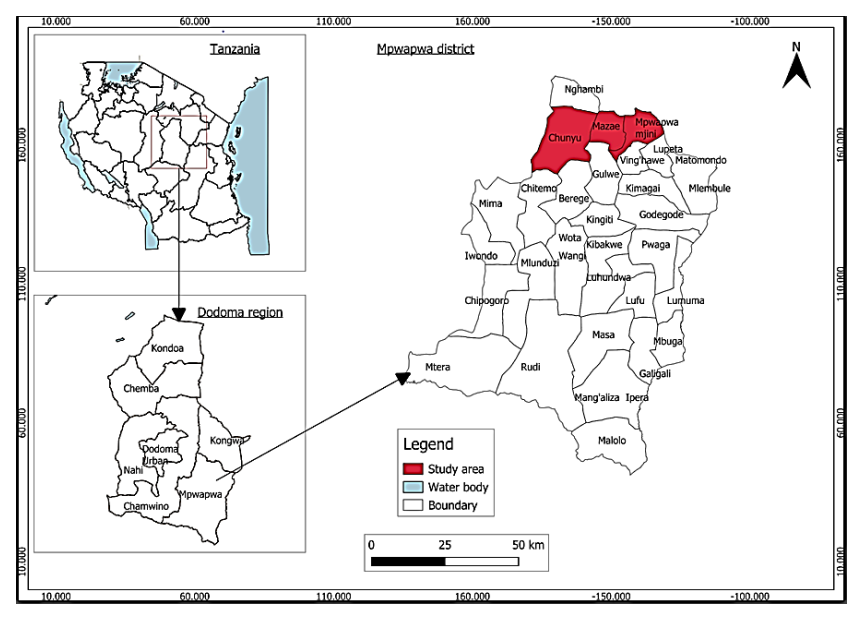
The study was conducted in Mpwapwa District, Dodoma region, central Tanzania (Figure 1), during the rainy season from February to April 2025. The district lies between latitude 6.567° South of the Equator and longitude 36.600° East of Greenwich, covering an area of 7489 square kilometres, and is located 120 km from Dodoma headquarters. The area has a dry savanna climate and receives an annual rainfall of 450-700 mm, with an average temperature of 27°C. Goat production is one of the key economic activities in the district, with an estimated population of 302,561 goats . Indigenous breeds account for nearly 99% of the total population in the region, while crossbreeds constitute 1% .
The district was chosen for the study due to its high population of local and blended goat breeds. Livestock production accounts for approximately 45% of Mpwapwa GDP, with about 90% of the population relying on agriculture and livestock as their primary source of income and as a means of diversifying production .
Figure 1. Map showing sampling sites in the study area.
2.2. Study Design and Sample Size Estimation
A cross-sectional design was adopted for this study. The study population comprised two breeds of goats, namely Gogo and Blended, which farmers keep under a traditional extensive management system. Selected households were those that indicated they had not used an anthelmintic for the preceding 8 to 10 weeks before sampling. Purposive sampling was employed to select wards and villages based on the populations of the two goat breeds. The animals were identified through farmers' records and their phenotypic characteristics, with numbers recorded due to a lack of animal identification.
The number of animals sampled in the study was determined using the formula described by Thrusfield, which is given as n=1.962.p.q/L2, where n = sample size, p = expected prevalence, q = 1-p, and L = absolute precision at a 95% confidence interval . Because the prevalence of GIPs in goats was unknown in the study area, the hypothesised prevalence of 85% was used, which is higher than 80% adopted by in communal areas with a 5% limit of error. The required sample size was found to be 196. However, 200 goats were sampled, of which 94 were Blended and 106 were Gogo, a local strain. Variables of interest were recorded based on animal identification (age, sex, breed, and physiological status), body condition score, and place of collection. The age of the goats was categorised as young (<1 year) and adult (>1 year) as described by . The body condition score (BCS) was assessed on a 1-5 scale through palpation of the lumbar and sternum regions of the goats and classified as fat (>3), normal/normal (>2<3), and poor (<2) .
2.3. Recruitment of Participating Herds and Data Collection
A multistage sampling approach consisting of purposive and random sampling was used. At first, purposive sampling was used to obtain three wards within the district based on the population of the two goat breeds and accessible infrastructure. Secondly, households were randomly selected using systematic sampling, and within households, individual goats were randomly chosen for faecal sampling. Animals from selected households were identified by their physical appearance, such as white colour (Gogo) and droopy ears (Blended), and records kept by farmers. Using a gloved index finger, a fresh faecal sample, approximately 10g, was collected directly from the rectum of a live animal, wrapped, labelled, and immediately kept in a cool box with ice packs before being transported to the laboratory at Sokoine University of Agriculture, College of Veterinary Medicine and Biomedical Sciences for parasitological analysis within 24 hours of collection. Simple flotation procedures were employed to determine nematode, cestode, and coccidia oocysts by separating eggs from faecal materials and concentrating them using flotation fluid (sodium chloride) with an appropriate specific gravity . The sedimentation method was used to detect trematode eggs in the faeces, as most trematode eggs are relatively larger and heavier . A sample was considered positive if it contained one or more parasitic eggs and was subjected to quantitative analysis using a simple McMaster technique (two-chambered) with a sensitivity of 50 eggs/oocysts per gram of faeces to determine parasitic eggs/oocysts per gram. Faecal egg count (FEC) and oocyst per gram (OPG) were calculated separately as the total number of eggs/oocysts present in both chambers (C1+ C2) x 50, where 50 is a factor specific for a 2:28 faeces/flotation solution ratio . Based on the number of eggs, the degree of infestation was categorised as light, moderate, or heavy infestation according to the EPG range of less than 500, between 500 and 1000, and over 1000, respectively . Quality control in the laboratory was observed by ensuring each slide was examined independently by two laboratory technicians, and discrepant results were rechecked jointly to maintain accuracy. The reagents and solutions used were freshly prepared and calibrated before each session; the microscope and egg counting chambers were routinely cleaned for precision. Both field and laboratory records were double-entered into a spreadsheet to minimise transcription errors. The datasets were cross-verified for consistency, and any inconsistencies were corrected by referring to the original datasheet.
2.4. Statistical Analysis
Data collected (age, sex, breed, body condition score, physiological status, and parasitological parameter) were entered and managed in a Microsoft Excel sheet, and Statistical analysis was done using IBM SPSS version 27 (2020) software. Descriptive statistics such as percentages and frequencies were employed to determine the prevalence of GIP, calculated as n/N, where “n” was the number of animals infected with a particular parasite and “N” was the total number of animals examined. The statistical comparison of prevalence between the two goat breeds was conducted using the Pearson Chi-square test (χ2) with variables collected from two goat breeds at a 95% confidence interval, with p<0.05 considered significant.
3. Results
3.1. Prevalence of GIP Related to Age, Sex, Breed, Status, and Body Condition of Animals
The results for GIP prevalence among breeds, age, sex, physiological status, and BCS are shown in Table 1. Out of 200 goat samples examined in the study area, a total of 123 tested positive for one or more GIP, resulting in an overall prevalence of 61.5% across the two goat breeds. Only the breed and physiological status of the goats showed a significant association (p<0.05) with GIP prevalence. Blended goats exhibited a higher infestation rate (71.3%) compared to Gogo goats (52.8%). Concerning the physiological status of the animals examined, the highest prevalence was recorded in dry does (81.3%), followed by weaners (65.6%) and pregnant does (64.6%). Lactating does were observed with a comparatively lower prevalence of 43.8%, while breeding bucks recorded the lowest prevalence of 16.7%. There was a tendency (P ≤ 0.1) for sex to be associated with prevalence, with females showing a higher prevalence rate (63.8%) compared to males (46.2%). However, age and BCS were not significantly associated with GIP prevalence. Young animals had a prevalence rate of 65.6%, adults 59.6%, while the prevalence of GIP among animals with fat, normal/good, and poor BCS was 67.4%, 58.45%, and 87.5%, respectively.
Table 1. Association between GIP prevalence and Breed, Sex, Age, Status, and BCS of goats.

Variable

Category

Total number

Not Infected

Number infected

Prevalence (%)

X2

P-value

Breed

Blended

94

27

67

71.3

7.14

0.007*

Gogo

106

50

56

52.8

Sex

Male

26

14

12

46.2

2.972

0.085

Female

174

63

111

63.8

Age

Adult

136

55

81

59.6

0.411

0.44

Young

64

22

42

65.6

Status

Weaner

64

22

42

65.6

12.788

0.012*

Dry does

16

3

13

81.3

Breeding bucks

6

5

1

16.7

Pregnant does

82

29

53

64.6

Lactating does

32

18

14

43.8

BCS

Fat

43

14

29

67.4

3.534

0.171

Normal/good

149

62

87

58.4

Poor

8

1

7

87.5

Total

200

77

123

61.5

3.2. Frequency and Diversity of Detected Gastrointestinal Parasites
After coprological analysis, eleven (11) genera of gastrointestinal parasites were detected in the study area with varying frequencies of occurrence (Table 2). The predominant GIP identified in two breeds of goats were Trichostrongylus, Haemonchus, Eimeria, Ostertagia, and Strongyloides species, with prevalence of 42.3%, 18.2%, 12.4%, and 5.8%, respectively. Bumostomum and Gaigeria species were the least detected parasites, with a prevalence of 2.9% and 0.7%, respectively. The occurrence of parasitic infestations in the two goat breeds involved in the study included both single-generic and mixed or polyparasitic infestations with more than one parasitic genus. The recorded mixed infestations comprised nematodes and protozoa (Trichostrongylus spp. with Eimeria spp.) as well as nematodes and trematodes (Haemonchus spp. with Dicrocoelium, and Strongyloides spp. and Trichostrongylus spp. with Cotylophoron spp). Some animals examined harbored infestations of more than one nematode (Strongyloides with Haemonchus spp., Trichostrongylus with Ostertagia spp., Strongyloides with Ostertagia spp., Ostertagia with Haemonchus spp., and Trichostrongylus with Haemonchus spp.).
Table 2. Frequency of occurrence of GIP in the study areas.

Parasitic name

Frequency

Percent

Trichostrongylus spp

58

42.3

Haemonchus spp

25

18.2

Eimeria spp

17

12.4

Ostertagia/Teladorsagia spp

8

5.8

Strongyloides spp

8

5.8

Dicrocoelium spp

5

3.6

Moniezia spp

5

3.6

Oesophagostomum spp

5

3.6

Bumostomum spp

4

2.9

Cotylophoron spp

1

0.7

Gaigeria spp

1

0.7

Total

137

100.0

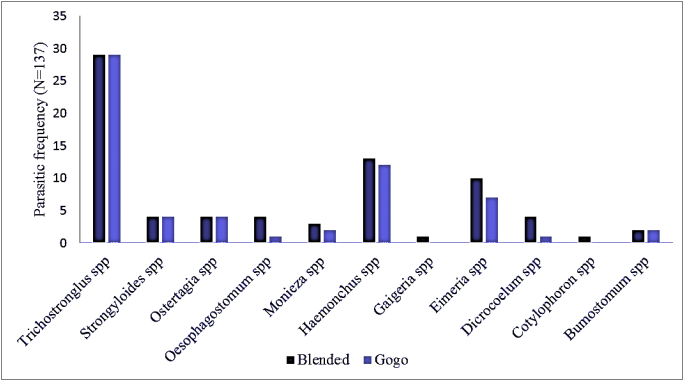
The overall trend in diversity of GIP across the two breeds indicates that both breeds are affected by multiple parasites, but the frequency differs, as shown in Figure 2. Blended goats were found to have higher counts of most parasites, such as Haemonchus spp., Eimeria spp., Oesophagostomum spp., and Dicrocoelium spp. Both breeds had high counts of Trichostrongylus spp., followed by moderate infestation with Haemonchus and Eimeria spp. For the remaining species, the frequency was less than 5.
Figure 2. Diversity of GIP in Blended and Gogo goats.
4. Discussion
The overall prevalence of GIP in goats in the study area was 61.5%, which was higher than the rates reported by in Mvomero and Kongwa districts in Tanzania, where the prevalence was 54.8% and 57.4%, respectively. The variation in GIP prevalence among goats is attributed to factors such as animal species studied, breed, season, or study duration . Additionally, poor herd management practices, including mixing different groups of animals, overstocking, inadequate nutrition, and frequent exposure to common grazing land, were observed to accelerate infestation rates in the study area .
In the current study, only breed and physiological status were found to be significantly associated with GIP prevalence. Blended goats exhibited a higher prevalence compared to Gogo goats. According to , differences in parasitic infestations among breeds are linked to genetic variations and differing management practices applied to the animals. A higher infestation rate in Blended goats may be attributed to genetic factors and production capacity, as increased productivity can weaken the body's immune response to fight and resist diseases, as noted in the study by . Conversely, the lower infestation rate observed in Gogo goats may be due to their native breed status, which makes them more adaptable and tolerant to various diseases and parasites across diverse agroecologies, including semi-arid regions .
In this study, the age and sex of goats were not significantly associated with the prevalence of GIP. Although a higher infestation rate was observed in young animals compared to adults, the difference was not statistically significant, possibly due to the small sample size. This finding contrasts with several previous studies that reported age-related susceptibility, with younger animals typically exhibiting higher prevalence due to their immature immune systems. However, our findings align with those of , who observed no significant difference between age groups, suggesting that under certain management systems, both young and adult goats may be equally exposed to infection risks. Conversely, reported higher GIP prevalence in adult animals, indicating that age-related susceptibility may also depend on environmental or husbandry conditions. Although female goats showed a higher observed prevalence compared to males, this difference was not statistically significant. This contrasts with studies by , who reported significantly higher infestation rates in females, attributing this to physiological stress and hormonal changes during pregnancy and lactation. In contrast, reported a higher prevalence in males. The absence of significant sex-related differences in the current study may be due to both sexes being kept under similar management, grazing, and deworming conditions, leading to equal exposure to infective stages, as supported by .
The prevalence of GIP in dry does was 81.6%, higher than in other categories, largely influenced by sex differences . Meanwhile, the prevalence in pregnant does was 64.6%, indicating the effect of stress, which could lower body immunity and increase susceptibility to parasitic infestations . Pregnancy-related hormonal changes can affect normal immune functioning and enhance the animals’ susceptibility to GIP . Additionally, female animals have been reported to be more prone to parasitic infestations than males due to stress and low immunity during pregnancy, parturient paresis, and lactation . Weaner goats showed a slightly higher rate of parasitic infestation, largely associated with age and immaturity of their immune systems, compared to adult goats .
The lower infestation rate observed in lactating does was probably linked to increased nutritional demands of animals for maintenance and milk production, which, in turn, reduces parasitic infestation levels, as discussed by . Despite the absence of a significant difference, the prevalence in animals with poor BCS was higher (87.5%) than in fat (67.4%) and normal conditions (58.4%). Animals in poor condition are often prone to infestations as GIP causes a reduction in appetite and poor feed utilisation, leading to emaciation . Malnutrition and other diseases, as well as current infestations, result in weakened immune response to the infective stage of parasites, thus leading to a high prevalence .
Various gastrointestinal parasitic species examined in the study area were found to occur in single and mixed infections, aligning with the findings of and . Nematodes were the most prevalent parasites, with Trichostrongylus spp. being the most common at 42.3% across the two breeds. The results align with those (43.6%) found by in semi-arid areas of Eastern Uganda, which were also linked to poor pasture management, deworming practices, and overcrowding of animals. Haemonchus spp. was the second most prevalent in the study area, possibly due to high humidity in the microclimate of faeces and herbage during the rainy season, which is vital for larval development and survival of most nematodes, as discussed by . The Trichostrongyloidea superfamily (including Haemonchus contortus, Teladorsagia circumcincta, and Trichostrongylus spp.) is zoonotic by nature and is common in rural and tribal communities with poor hygiene and pastoral lifestyles, as in the study area . The presence of trematodes such as Dicrocoelium spp., responsible for causing hepatic infestations in the host, is linked to the presence of intermediate hosts such as ants and snails, and environmental conditions, especially humidity and temperature, that favour the survival and transmission of the parasites .
The recorded occurrence of Eimeria spp. (12.4%) was slightly higher than the 10% prevalence reported by in Mwanza city, Tanzania. Eimeria spp. is responsible for causing coccidiosis in goats, and its presence in the study area was associated with poor managerial factors, including sanitation, housing conditions, nutrition, and health management, particularly deworming practices . The results indicate that Trichostrongylus and Haemonchus species are the major parasitic threats in the study area, with potential for causing significant health and productivity losses. Breed-wise, Blended goats were found to be more susceptible to a wide range of GIP compared to Gogo, possibly due to genetic differences, unlike Gogo, which is native and possesses better resilience and resistance traits towards local environment and parasite challenges . Despite showing the wide range of GIP species, the study is limited to a cross-sectional design, which provides only a single-time assessment; thus, seasonal variation in parasite levels could not be evaluated. Also, faecal culture was not performed; hence, the identification of GIP was presented at the genus level only instead of the species level. These limitations notwithstanding, the study findings offer a useful baseline for future longitudinal and molecular studies on GIP epidemiology in goats reared in semi-arid areas.
5. Conclusion and Recommendations
The results of the present study indicated differences in levels and diversity of GIP between the two goat breeds. Also, the physiological status of goats was determined to have an effect on the prevalence of GIP. Therefore, it is crucial for farmers, especially those who keep Blended goats, to adhere to ideal management practices such as nutrition, hygiene, and routine deworming to minimise the rate of infestations. Enhancement of farmers' knowledge on appropriate managerial practices and strengthening control measures to mitigate the effects caused by GIP is recommended.
Abbreviations

GIP

Gastrointestinal Parasites

GDP

Gross Domestic Product

SEA

Small East Africa Breed

BCS

Body Condition Score

FEC

Faecal Egg Count

OPG

Oocysts Per Gram

EPG

Egg Per Gram

Acknowledgments
The authors acknowledge DAARS staff, Mr. Frank Mhonzya from the Department of Veterinary Medicine and Public Health, goat farmers, and staff at Mpwapwa district for their active participation in the study.
Author Contributions
Imani Clemence Mgalla: Conceptualization, Data curation, Methodology, Project administration, Resources, Software, Writing – original draft
Said Hemed Mbaga: Conceptualization, Supervision, Writing – review & editing
Athumani Shabani Nguluma: Conceptualization, Project administration, Supervision, Writing – review & editing
George Makingi: Methodology, Project administration, Supervision, Writing – review & editing
Ethical Approval
The study was approved by Sokoine University of Agriculture with clearance permit No. SUA/ADM/R.1/8/1333. Ethical concerns were taken into consideration by adhering to local animal welfare regulations and practices for the use of animals in research (TLRI/CC.21/046).
Consent for Publication
All authors agree to publish the findings of the current research.
Conflicts of Interest
The authors declare no conflict of interest.
References
[1] Ministry of Livestock and Fisheries, “The United Republic of Tanzania, Ministry of Livestock and Fisheries: Livestock Sector Transformation Plan (LSTP) 2022/23 - 2026/27,” 2022, p. 81.
[2] K. Ngongolo and N. E. Mmbaga, “A study on the productivity and mortality rates of native and blended goats in Dodoma, Tanzania,” Pastoralism, vol. 12, no. 1, 2022,
[3] S. Kusza, “A Review on Indigenous Goats of East Africa: A Case for Conservation and Management,” 2024.
[4] A. Nguluma et al., “Typology and characteristics of indigenous goats and production systems in different agro-ecological zones of Tanzania,” Trop. Anim. Health Prod., vol. 54, no. 1, 2022,
[5] R. Verma et al., “Epidemiology of Common Gastrointestinal Parasitic Infections in Goats reared in Semi-Arid Region of India,” no. February, pp. 39–45, 2018,
[6] M. M. Gobena, “Production Performance, Challenges and Opportunity of Goat Production in Ethiopia,” vol. 50, pp. 26–35, 2016.
[7] R. Day, A. Mohamed-brahmi, and F. Aribi, “Sustainable Goat Farming in Southeastern Tunisia : Challenges and Opportunities for Profitability,” pp. 1–25, 2025.
[8] J. R. L. Mhoma, P. W. N. Kanyari, and J. M. Kagira, “The prevalence of gastro-intestinal parasites in goats in urban and peri-urban areas of Mwanza City, Tanzania,” vol. 12, no. December, pp. 191–196, 2011.
[9] P. I. Zvinorova, T. E. Halimani, F. C. Muchadeyi, O. Matika, V. Riggio, and K. Dzama, “Prevalence and risk factors of gastrointestinal parasitic infections in goats in low-input low-output farming systems in Zimbabwe,” Small Rumin. Res., vol. 143, pp. 75–83, 2016,
[10] W. Namutosi, J. Higenyi, E. Kizito, and M. Omodo, “Prevalence and Risk Factors of Gastrointestinal Parasite Infection in Goats in Sironko District, Eastern Uganda,” Uganda J. Agric. Sci., vol. 19, no. 1, pp. 1–14, 2020,
[11] K. Shrivastava, A. P. Singh, K. Jadav, S. Shukla, and S. Prasad, “Caprine haemonchosis: optimism of breeding for disease resistance in developing countries,” 2022,
[12] I. I. Abdul-rahman, P. I. Fuachie, and M. J. Tati, “Gastrointestinal Parasite Infection in Small Ruminants Relative to Host sex, Age and Husbandry System Under the Guinnea Savannah Vegatations,” vol. 38, no. 2, pp. 139–155, 2022.
[13] T. J. Mpofu, “Gastrointestinal parasite infection intensity and hematological parameters in South African communal indigenous goats in relation to anemia,” vol. 13, pp. 2226–2233, 2020.
[14] P. Admasu and L. Nurlign, “Prevalence of gastrointestinal parasites of small ruminants in Kuarit District, North West Ethiopia,” African J. Basic Appl. Sci., vol. 6, no. 5, pp. 125–130, 2014,
[15] N. Moje, A. Gurmesa, and G. Regassa, “Gastro-intestinal Tract Nematodes of Small Ruminants : Prevalence and Their Identification in and Around Alage, Southern Ethiopia,” vol. 9, no. 3, pp. 65–72, 2021,
[16] T. J. Mpofu, K. A. Nephawe, and B. Mtileni, “Prevalence of gastrointestinal parasites in communal goats from different agro-ecological zones of South Africa,” vol. 13, 2020.
[17] L. J. M. Kusiluka, D. M. Kambarage, and L. J. S. Harrison, “Prevalence and seasonal patterns of coccidial infections in goats in two ecoclimatic areas in Morogoro, Tanzania,” vol. 30, pp. 85–91, 1998.
[18] D. M. Kambarage, S. I. Kimera, L. J. M. Kusiluka, and M. M. A. Mtambo, “Prevalence of Eimeria and Cryptosporidium oocysts in cattle, sheep and goats in Morogoro Region, Tanzania,” vol. 2119, 2011,
[19] D. Said et al., “Animal health constraints in dairy goats kept under smallholder farming systems in Kongwa and Mvomero Districts, Tanzania,” vol. 6, no. November, pp. 268–279, 2014,
[20] G. S. Materu, J. S. Nzalawahe, M. E. Sengupta, and A. Stensgaard, “Prevalence, Distribution and Risk Factors for Trematode Infections in Domesticated Ruminants in the Lake and Southern Zones of Tanzania : A Cross-Sectional Study Prevalence, Distribution and Risk Factors for Trematode Infections in Domesticated Ruminant,” 2024,
[21] H. Bedada, F. Gizaw, W. Negash, V. Medicine, and P. O. Box, “Preliminary Study on Small Ruminant GIT Helminthiasis in Select Arid and Semi-arid Pastoral and Agro-pastoral Areas of Afar Region, Ethiopia,” vol. 1, no. 1, pp. 1–9, 2018.
[22] D. M. Komwihangilo, M. Jackson, Y. Munishi, B. S. A. Liheta, N. Livestock, and P. O. Box, “Situational analysis of smallholder goat production and marketing in Central Tanzania point towards the establishment of farmers ’ groups,” vol. 4, no. 12, pp. 356–364, 2012,
[23] F. B. C. Njau, J. Lwelamira, and C. Hyandye, “Ruminant livestock production and quality of pastures in the communal grazing land of semi arid central Tanzania,” Livest. Res. Rural Dev., vol. 25, no. 8, pp. 1–13, 2016.
[24] A. A.. Nor-Azlina and O. M., Sani, R. A. and Ariff, “Management Practices Affecting Helminthiasis in Goats,” vol. 34, no. November 2010, pp. 295–301, 2011.
[25] D. K. Sharma, S. Paul, and K. Gururaj, “Gastrointestinal Helminthic Challenges in Sheep and Goats in Afro-Asian Region : A Review,” vol. 10, no. February, pp. 1–18, 2020,
[26] H. Mruttu, C. Ndomba, G. Gebru, and J. Stapleton, “Animal breeding and genetics in the Tanzania livestock master plan,” 2015.
[27] R. B. Onzima, R. Mukiibi, A. Ampaire, K. K. Benda, and E. Kanis, “Between-breed variations in resistance / resilience to gastrointestinal nematodes among indigenous goat breeds in Uganda,” pp. 1763–1769, 2017,
[28] V. Philipo, A. M. Lupindu, and J. S. Nzalawahe, “Epidemiology and Molecular Identification of Coenurus cerebralis in Sheep and Goats in Mpwapwa District, Tanzania: Factors to Consider in Control Plans,” Vet. Med. Int., vol. 2024, no. 1, 2024,
[29] I. Mengele, “Bovine brucellosis seroprevalence, farmers ’ awareness, practices and animal health extension services inputs in Mpwapwa district, Tanzania Bovine brucellosis seroprevalence, farmers ’ awareness, practices and animal health extension services inputs,” Tanzania Vet. J. · January 2023., no. January, 2023.
[30] M. Thrusfield, veterinary epidemiology. 1995. Available:
[31] M. Bhowmik et al., “Prevalence of Gastrointestinal Parasitic Infections in Sheep and Goats of Sandwip Island, Chattogram, Bangladesh,” Van Vet. J., vol. 31, no. 3, pp. 152–157, 2020,
[32] J. Hansen and B. Perry, “The epidemiology, diagnosis and control of helminth parasites of ruminants,” Prev. Vet. Med., vol. 31, no. 1–2, pp. 161–162, 1994,
[33] B. T. Paul et al., “veterinary sciences Risk Factors and Severity of Gastrointestinal Parasites in Selected Small Ruminants from Malaysia,” Vet. Sci. 2020, 7, 208, p. 14, 2020.
[34] A. Rani, N. Begum, A. Alim, S. Malakar, T. Islam, and M. Zahangir, “Gastro-intestinal nematodes in goats in Bangladesh: A large- scale epidemiological study on the prevalence and risk factors,” Parasite Epidemiol. Control, vol. 9, p. e00146, 2020,
[35] S. Islam, S. Hossain, A. R. Dey, A. Alim, S. Akter, and Z. Alam, “Epidemiology of gastrointestinal parasites of small ruminants in Mymensingh, Bangladesh,” vol. 7710, no. December, pp. 356–362, 2017.
[36] A. Rahman, S. S. Labony, A. R. Dey, and M. Z. Alam, “An epidemiological investigation of gastrointestinal parasites of small ruminants in Tangail, Bangladesh,” vol. 15, no. 2, pp. 255–259, 2017,
[37] M. A. Raza, M. Younas, and E. Schlecht, “Prevalence of gastrointestinal helminths in pastoral sheep and goat flocks in the cholistan desert of Pakistan,” J. Anim. Plant Sci., vol. 24, no. 1, pp. 127–134, 2014.
[38] S. Mideksa, N. Mekonnen, Y. Muktar, V. Medicine, P. O. Box, and D. Dawa, “Prevalence and Burden of Nematode Parasites of Small Ruminants in and Around Haramaya University,” vol. 34, no. 5, pp. 644–651, 2016,
[39] M. Adua, K. O. Idahor, and U. Sambo, “Role of physiological status of ruminant animals reared in Lafia metropolis on gastrointestinal parasites burden,” no. September, 2017,
[40] N. M. F. Hassan, T. K. Farag, N. M. T. Abu El Ezz, and H. A. A. Abou-Zeina, “Prevalence assessment of gastrointestinal parasitic infections among goats in Giza Governorate, Egypt,” Bull. Natl. Res. Cent., vol. 43, no. 1, 2019,
[41] K. Ashrafi, M. Sharifdini, Z. Heidari, B. Rahmati, and E. B. Kia, “Zoonotic transmission of Teladorsagia circumcincta and Trichostrongylus species in Guilan province, northern Iran: Molecular and morphological characterizations,” BMC Infect. Dis., vol. 20, no. 1, pp. 1–9, 2020,
[42] D. K. Sharma, A. Mandal, B. Section, and E. Regional, “Factors affecting gastrointesti- nal parasite infections in goats in semi-arid rural ecosystems in India,” Vet. Sci. Dev. 2013, vol. 3, pp. 5–8, 2013,
Cite This Article
  • APA Style

    Mgalla, I. C., Makingi, G., Nguluma, A. S., Mbaga, S. H. (2025). Prevalence and Diversity of Gastrointestinal Parasites in Native and Blended Goats from Mpwapwa District, Tanzania. Animal and Veterinary Sciences, 13(5), 152-161. https://doi.org/10.11648/j.avs.20251305.15

    Copy | Download

    ACS Style

    Mgalla, I. C.; Makingi, G.; Nguluma, A. S.; Mbaga, S. H. Prevalence and Diversity of Gastrointestinal Parasites in Native and Blended Goats from Mpwapwa District, Tanzania. Anim. Vet. Sci. 2025, 13(5), 152-161. doi: 10.11648/j.avs.20251305.15

    Copy | Download

    AMA Style

    Mgalla IC, Makingi G, Nguluma AS, Mbaga SH. Prevalence and Diversity of Gastrointestinal Parasites in Native and Blended Goats from Mpwapwa District, Tanzania. Anim Vet Sci. 2025;13(5):152-161. doi: 10.11648/j.avs.20251305.15

    Copy | Download

  • @article{10.11648/j.avs.20251305.15,
      author = {Imani Clemence Mgalla and George Makingi and Athumani Shabani Nguluma and Said Hemed Mbaga},
      title = {Prevalence and Diversity of Gastrointestinal Parasites in Native and Blended Goats from Mpwapwa District, Tanzania
    },
      journal = {Animal and Veterinary Sciences},
      volume = {13},
      number = {5},
      pages = {152-161},
      doi = {10.11648/j.avs.20251305.15},
      url = {https://doi.org/10.11648/j.avs.20251305.15},
      eprint = {https://article.sciencepublishinggroup.com/pdf/10.11648.j.avs.20251305.15},
      abstract = {Gastrointestinal parasites (GIP) in goats pose a global challenge, resulting in significant negative impacts that affect health, productivity, and economic value. These parasites include nematodes, cestodes, and protozoa. The current study aimed to determine the prevalence and diversity of gastrointestinal parasites in goats found in Mpwapwa District. A cross-sectional study was carried out in Mpwapwa District from February to April 2025. A total of 200 faecal samples were obtained and analysed to detect gastrointestinal parasites. Additionally, a structured questionnaire was used to gather information from farmers on factors that might be linked to gastrointestinal parasitic infestations. The findings revealed a wide diversity of GIP in the study area, with a total of 11 GIP genera identified. The overall prevalence of GIP in goats was 61.5%. Breed-wise, Blended goats had a significantly (p0.05). Additionally, the physiological status of animals was significantly (p0.05). The most prevalent parasite was Trichostrongylus spp. At 42.3%, followed by Haemonchus and Eimeria spp., with prevalence of 18.2% and 12.4%, respectively. The current study revealed a high prevalence of parasites, indicating that GIP are a major challenge in goat production in the study area. Therefore, the application of proper control measures is recommended for the welfare of the goat production, but also addresses parasites that have zoonotic significance.
    },
     year = {2025}
    }
    

    Copy | Download

  • TY  - JOUR
    T1  - Prevalence and Diversity of Gastrointestinal Parasites in Native and Blended Goats from Mpwapwa District, Tanzania
    
    AU  - Imani Clemence Mgalla
    AU  - George Makingi
    AU  - Athumani Shabani Nguluma
    AU  - Said Hemed Mbaga
    Y1  - 2025/10/30
    PY  - 2025
    N1  - https://doi.org/10.11648/j.avs.20251305.15
    DO  - 10.11648/j.avs.20251305.15
    T2  - Animal and Veterinary Sciences
    JF  - Animal and Veterinary Sciences
    JO  - Animal and Veterinary Sciences
    SP  - 152
    EP  - 161
    PB  - Science Publishing Group
    SN  - 2328-5850
    UR  - https://doi.org/10.11648/j.avs.20251305.15
    AB  - Gastrointestinal parasites (GIP) in goats pose a global challenge, resulting in significant negative impacts that affect health, productivity, and economic value. These parasites include nematodes, cestodes, and protozoa. The current study aimed to determine the prevalence and diversity of gastrointestinal parasites in goats found in Mpwapwa District. A cross-sectional study was carried out in Mpwapwa District from February to April 2025. A total of 200 faecal samples were obtained and analysed to detect gastrointestinal parasites. Additionally, a structured questionnaire was used to gather information from farmers on factors that might be linked to gastrointestinal parasitic infestations. The findings revealed a wide diversity of GIP in the study area, with a total of 11 GIP genera identified. The overall prevalence of GIP in goats was 61.5%. Breed-wise, Blended goats had a significantly (p0.05). Additionally, the physiological status of animals was significantly (p0.05). The most prevalent parasite was Trichostrongylus spp. At 42.3%, followed by Haemonchus and Eimeria spp., with prevalence of 18.2% and 12.4%, respectively. The current study revealed a high prevalence of parasites, indicating that GIP are a major challenge in goat production in the study area. Therefore, the application of proper control measures is recommended for the welfare of the goat production, but also addresses parasites that have zoonotic significance.
    
    VL  - 13
    IS  - 5
    ER  - 

    Copy | Download

Author Information